2026.11.17 Tuesday
Unraveling Bonding Evolution in Carbon-Centered Gold(I) Clusters
Theoretical Insights into Chemical Bonding, Structural Stability, and Ligand Effects
Researchers have revealed how chemical bonding in carbon-centered gold clusters changes with the number of gold atoms surrounding the central carbon atom. The study also shows how ligands influence the structure, stability, and chirality of these clusters, providing insights into the design of functional gold nanoclusters.
Gold nanoclusters, composed of a small number of gold atoms, can exhibit optical, electronic, and catalytic properties distinct from those of bulk gold. One intriguing family consists of carbon-centered gold(I) clusters, in which a carbon atom is surrounded by several gold atoms. Unlike the familiar four-coordinate carbon in methane, the central carbon in these clusters can be coordinated by five or even six gold atoms. Since the first carbon-centered hexagold(I) cluster was reported in 1988, researchers have developed related compounds with unusual structures and, in some cases, distinctive luminescence. Nevertheless, although several such clusters have been synthesized and characterized, how their carbon–gold bonds change as the number of gold atoms increases has remained unclear.
A collaborative team from the Institute for Molecular Science, Tokyo University of Science, and Fuzhou University has now addressed this question using quantum chemical calculations. The researchers systematically compared carbon-centered clusters containing four, five, or six gold atoms (CAu4, CAu5, and CAu6), protected by N-heterocyclic carbene (NHC) or triphenylphosphine (PPh3) ligands. Their findings reveal how the number of gold atoms governs the way electrons are shared within the metal core.
To investigate the bonding, the team combined density functional theory with adaptive natural density partitioning (AdNDP), a method that identifies electron pairs shared among atoms. In CAu6, the central carbon forms three delocalized three-center, two-electron (3c–2e) bonds, in which each electron pair is shared across an Au–C–Au unit. In contrast, CAu4 contains four conventional two-center, two-electron (2c–2e) bonds, each involving one carbon and one gold atom. The five-gold cluster provides a particularly revealing link between the two patterns. Its two axial C–Au bonds are classified as 2c–2e bonds, but their orbital characteristics resemble those of the 3c–2e bonds in CAu6. In contrast, the three equatorial C–Au bonds exhibit conventional two-center characteristics similar to those in CAu4.
These findings establish CAu5 as an intermediate between CAu4 and CAu6, revealing a systematic evolution in C–Au bonding from localized two-center two-electron bonds to delocalized three-center two-electron bonds (Figure 1). To understand the electronic origin of this evolution, the researchers analyzed the contributions of the central carbon atom's 2s and 2p orbitals, identifying their relative contributions as a key indicator of the C–Au bonding characteristics. In addition to C–Au bonding, the study also examined interactions between neighboring gold atoms, providing further insights into the bonding and stability of these unusual clusters.
Beyond bonding itself, the researchers examined how surrounding ligands affect the CAu6 core. Smaller ligands generally favor more symmetric core structures, whereas bulkier ligands can promote distortion and favor asymmetric arrangements. The researchers further demonstrated that both the distortion of the CAu6 core and the chirality of the ligands contribute to the overall chirality of the clusters (Figure 2).
Overall, this study provides a comprehensive understanding of how gold coordination and ligand effects influence the chemical bonding, structural stability, and chirality of carbon-centered gold(I) clusters. These findings offer valuable insights for the rational design of functional gold(I) nanoclusters.
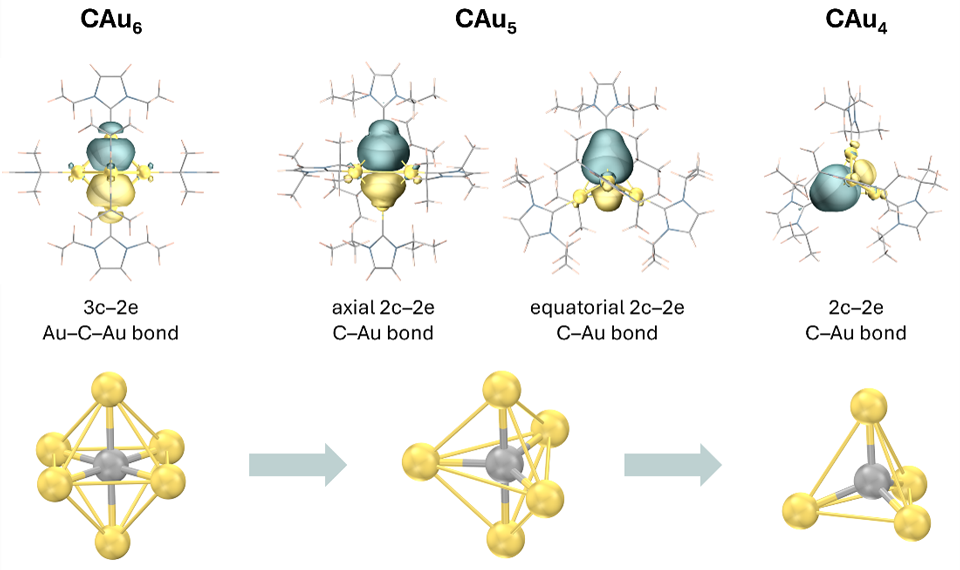
Figure 1: Evolution of C–Au Bonding in Carbon-Centered Gold(I) Clusters.
Representative bonding orbitals obtained from AdNDP analysis (top) and the corresponding core structures (bottom) of CAu6, CAu5, and CAu4 clusters. As the number of gold atoms decreases from six to four, C–Au bonding evolves from delocalized three-center two-electron (3c–2e) bonds to conventional two-center two-electron (2c–2e) bonds. CAu5 exhibits intermediate bonding characteristics, with distinct axial and equatorial 2c–2e bonds.
Image credit: Institute for Molecular Science / Tokyo University of Science, Restriction: News organizations may use or redistribute this image, with proper attribution, as part of news coverage of this paper only.
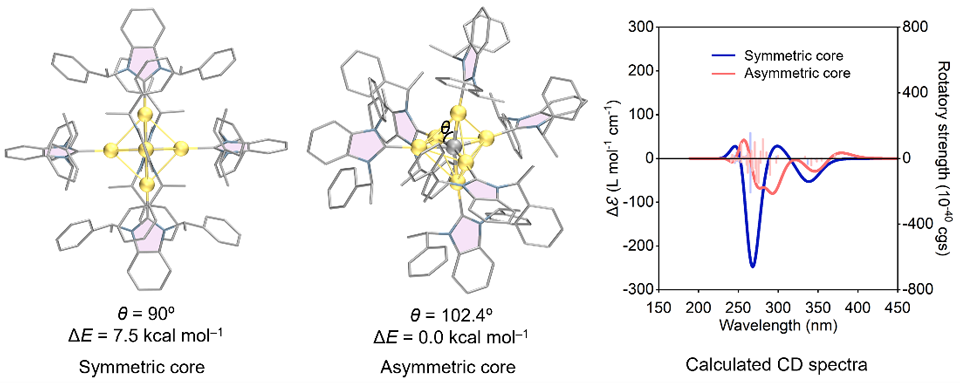
Figure 2: Effects of Core Distortion on the Chiroptical Properties of CAu6 Clusters.
Comparison of symmetric and asymmetric CAu6 core structures protected by the same chiral N-heterocyclic carbene ligand, together with their calculated circular dichroism (CD) spectra. The asymmetric core is 7.5 kcal mol-1 more stable than the symmetric core. Both configurations exhibit CD signals, highlighting the contributions of core distortion and ligand chirality to the chiroptical properties of CAu6 clusters.
Image credit: Institute for Molecular Science / Tokyo University of Science, Restriction: News organizations may use or redistribute this image, with proper attribution, as part of news coverage of this paper only.
Reference
| Title of original paper | : | Unraveling Bonding Evolution in Carbon-Centered Gold(I) Clusters: Structural, Electronic, and Ligand Effects |
| Journal | : | JACS Au |
| DOI | : | 10.1021/jacsau.6c01017 |
| Authors | : | Pei Zhao, Xiao-Li Pei, Zhen Lei, Hitoshi Ube, Mitsuhiko Shionoya, and Masahiro Ehara |
About The Tokyo University of Science
Tokyo University of Science (TUS) is a well-known and respected university, and the largest science-specialized private research university in Japan, with four campuses in central Tokyo and its suburbs and in Hokkaido. Established in 1881, the university has continually contributed to Japan's development in science through inculcating the love for science in researchers, technicians, and educators.
With a mission of "Creating science and technology for the harmonious development of nature, human beings, and society," TUS has undertaken a wide range of research from basic to applied science. TUS has embraced a multidisciplinary approach to research and undertaken intensive study in some of today's most vital fields. TUS is a meritocracy where the best in science is recognized and nurtured. It is the only private university in Japan that has produced a Nobel Prize winner and the only private university in Asia to produce Nobel Prize winners within the natural sciences field.
■
Tokyo University of Science(About TUS)
About Professor
SHIONOYA Mitsuhiko
from Tokyo University of Science
About Junior Associate Professor UBE Hitoshi
from Tokyo University of Science
About Junior Associate professor PEI XIAOLI
from Tokyo University of Science
Financial Supports
JSPS KAKENHI, Grant Numbers JP22H05133, JP21H05022, JP24K17663, JP22K14691, JP24K08443
MEXT KAKENHI, Grant Number JP16H06509
JST CREST, Japan, Grant Number JPMJCR22B2