2026.03.13 Friday
New Study Clarifies How Temperature Shapes Sex Development in Leopard Gecko
Researchers pinpoint when temperature determines sex and uncover early genetic changes guiding male or female development in leopard gecko
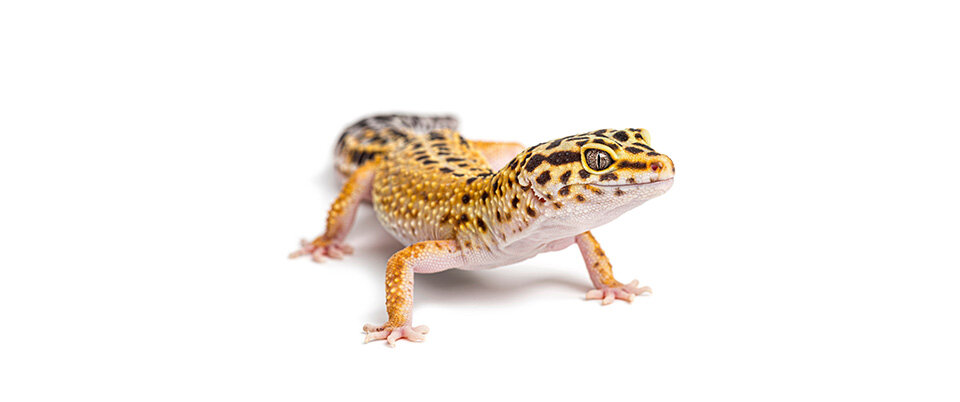
In reptiles, a simple temperature change can determine whether an egg develops into a male or female. This process is formally known as temperature-dependent sex determination (TSD), in which the sex of an embryo is determined by the temperature it experiences during a specific window of development known as the temperature-sensitive period. For example, in American alligators, incubation at around 30 ℃ typically produces females, while temperatures near 33 ℃ produce males, although extremely high temperatures can again result in females. Although TSD has been studied for decades, its mechanisms in squamates—the large and diverse group of reptiles that includes lizards and snakes—have been largely overlooked.
To address this gap, a team of researchers led by Professor Shinichi Miyagawa from the Department of Biological Science and Technology, Tokyo University of Science, Japan, investigated TSD in the leopard gecko (Eublepharis macularius), a lizard species where lower temperatures of about 26 ℃ produce females, while higher temperatures around 32 ℃ produce mostly males. Their study was made available online on February 18, 2026, and will be published in Volume 533 of the journal Developmental Biology on May 01, 2026.
"Our study is the first to provide a comprehensive histological and transcriptomic analysis of gonadal development in the leopard gecko with a TSD system," says Prof. Miyagawa.
In this study, the team incubated eggs at either 26.5 ℃, a female-producing temperature, or 31.5 ℃, a male-producing temperature. To determine the exact window when temperature influences sex, they performed shift experiments, moving eggs between the two temperatures on different days after they were laid.
When the eggs were close to hatching, the researchers examined their gonads, the organs that develop into ovaries or testes, to determine their sex. Notably, incubation at the cooler temperature produced 100% females, while the warmer temperature produced 91% males.
Early in development, embryos from both temperature groups appeared similar, with no obvious external differences. The first clear structural differences appeared later, when ovaries became more spherical and testes elongated and formed seminiferous tubules. However, gene expression analysis showed that male and female developmental pathways had already begun to diverge before these visible changes appeared. Important testis-related genes such as AMH, DMRT1, and SOX9 were activated earlier at male-producing temperatures, while ovarian genes such as FOXL2 and CYP19A1 became more active at female-producing temperatures.
The team determined that the temperature-sensitive period ends at embryonic stage 36. Before this stage, changing the incubation temperature could still alter the sex. However, after this point, the sex was set and could no longer be changed by temperature.
The study also uncovered features unique to the leopard gecko. For example, the gene KDM6B, which plays a key role in male determination in turtles, showed a different pattern of regulation in this species. In addition, it identified early temperature-responsive genes involved in RNA splicing and cell adhesion, suggesting that changes at the molecular level begin before any physical differences between males and females become apparent.
The researchers add that factors such as the mother's body temperature before laying egg may influence early development and could vary between laboratories. However, their findings show that the genes responsible for forming gonads are largely shared across reptiles, but the way temperature controls these genes has evolved differently in different reptile groups.
"Our study addresses a critical phylogenetic gap in TSD studies and contributes significantly to the broader understanding of the evolutionary plasticity and molecular complexity by which environmental cues direct biological fate," concludes Prof. Miyagawa.
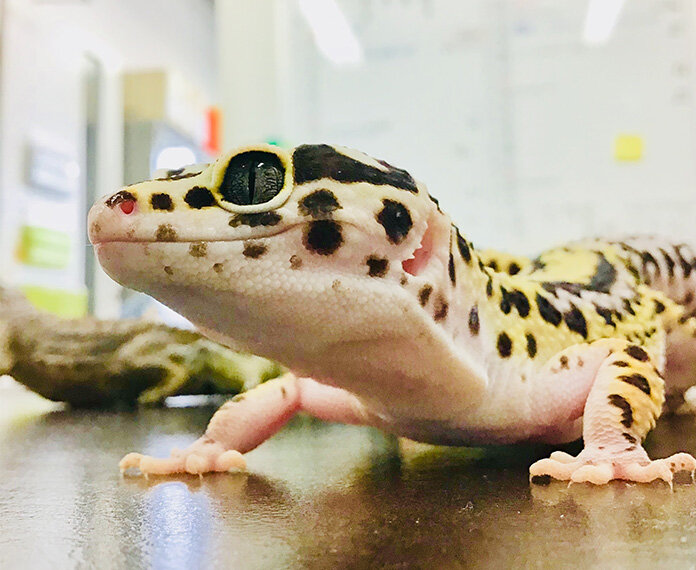
Image title: Transcriptome analysis of temperature-dependent sex determination in leopard geckos
Image caption: Researchers discover leopard gecko produces females at cooler incubation temperatures and mostly males at warmer ones. This clear sex-determination pattern of leopard gecko has established it as a key model for studying environmental effects on development.
Image credit: Professor Shinichi Miyagawa from Tokyo University of Science, Japan
License type: Original content
Usage restrictions: Cannot be reused without permission.
Reference
| Title of original paper | : | Gonadal development and gene expression in the leopard gecko during temperature-dependent sex determination |
| Journal | : | Developmental Biology |
| DOI | : | 10.1016/j.ydbio.2026.02.011 |
About The Tokyo University of Science
Tokyo University of Science (TUS) is a well-known and respected university, and the largest science-specialized private research university in Japan, with four campuses in central Tokyo and its suburbs and in Hokkaido. Established in 1881, the university has continually contributed to Japan's development in science through inculcating the love for science in researchers, technicians, and educators.
With a mission of "Creating science and technology for the harmonious development of nature, human beings, and society," TUS has undertaken a wide range of research from basic to applied science. TUS has embraced a multidisciplinary approach to research and undertaken intensive study in some of today's most vital fields. TUS is a meritocracy where the best in science is recognized and nurtured. It is the only private university in Japan that has produced a Nobel Prize winner and the only private university in Asia to produce Nobel Prize winners within the natural sciences field.
■
Tokyo University of Science(About TUS)
About Professor Shinichi Miyagawa
from Tokyo University of Science
Dr. Shinichi Miyagawa is a Professor at the Department of Biological Science and Technology, Tokyo University of Science, Japan. His research area includes tumor biology, developmental biology, and morphology/structure. He serves on the editorial board of the Journal of Applied Toxicology and is an active member of several international scientific committees focused on endocrinology and environmental science. He has been felicitated with several awards including the NIBB Young Scientist Award in 2015 and the National Institutes of Natural Sciences Young Scientist Award in 2012.
Funding information
This work was supported by Grant-in-Aid for Scientific Research B [Grant Number JP21H02522 (Shinichi Miyagawa)], Early-Career Scientists [20K15835 (Genki Yamagishi)], JSPS Fellows [22KJ2802 (Genki Yamagishi)] and Scientific Research on Innovative Areas [JP17H06432 (Shinichi Miyagawa)] from Japan Society for the Promotion of Science (JSPS).