2026.01.15 Thursday
Potential Tumor-Suppressing Gene Identified in Pancreatic Cancer
Low levels of CTDNEP1 may drive early and deadly pancreatic tumors, highlighting its role as a tumor suppressor
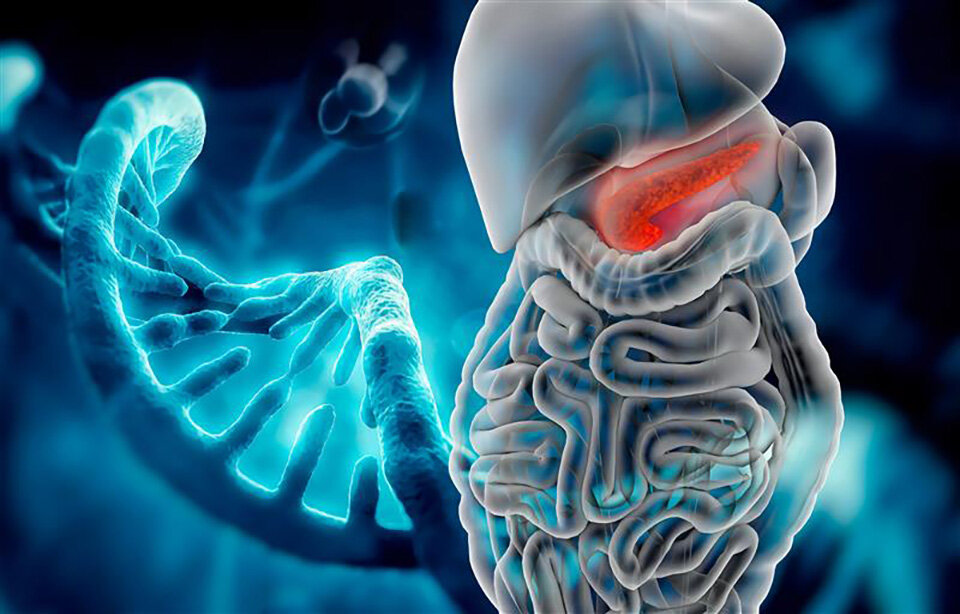
Pancreatic ductal adenocarcinoma (PDAC) is the most common type of pancreatic cancer and begins in the cells lining the pancreatic duct. Accounting for more than 90% of all pancreatic cancers, PDAC is extremely difficult to treat and has a very high mortality rate. According to the Global Cancer Observatory 2022 report, pancreatic cancer is the sixth most common cancer in Japan, with over 47,000 new cases and more than 40,000 deaths, making it the fourth leading cause of cancer-related mortality in the country.
In search of potential treatments, Ms. Mayuka Nii, a second-year doctoral student, and Professor Tadayoshi Hayata from the Faculty of Pharmaceutical Sciences at Tokyo University of Science, Japan, have turned their attention to the gene CTD nuclear membrane phosphatase 1 (CTDNEP1). This gene encodes a phosphatase involved in several cellular pathways and is known to be involved in medulloblastoma, a pediatric brain tumor. Previously, the researchers found that CTDNEP1 plays a suppressive role in osteoclast cell differentiation, which are cells involved in the breakdown and removal of old or damaged bone tissue. Now, with the results of their study, researchers believe that this gene may also play a protective role in pancreatic cancer and could contribute to its early detection. The study was online published in Volume 23, Issue 1 of the journal Cancer Genomics & Proteomics on January 01, 2026.
"PDAC is one of the most difficult cancers to treat and has a very high mortality rate. To find new treatments, it is important to identify genes involved in cancer progression. Our research points to CTDNEP1 as a possible tumor-suppressing gene that could help slow the cancer," says Prof. Hayata.
To explore this, the researchers analyzed data from The Cancer Genome Atlas (TCGA) and the Pan-Cancer Atlas, which include genetic and clinical information from 184 patients with PDAC. They also used TIMER2.0 (Tumor IMmube Estimation Resource) and UALCAN (the University of ALabama at Birmingham CANcer data analysis Portal), two web resources for studying cancer-related genes and immune cell infiltration. Using these sources, the team examined CTDNEP1's relationship with patient survival, its biological functions, and its interaction with the tumor's immune environment.
Their findings reveal that CTDNEP1 plays an important role in pancreatic cancer. CTDNEP1 levels were significantly lower in PDAC tissue compared to healthy tissue, especially in the early stages of the disease. When CTDNEP1 was low, tumors were more likely to carry harmful mutations in key cancer-related genes such as KRAS and TP53. Patients with low CTDNEP1 expression had significantly poorer survival rates, particularly those diagnosed with stage II cancer.
CTDNEP1 was also found to influence the tumor microenvironment. They found that low CTDNEP1 expression creates an environment that helps tumors evade the immune system. Low expression was associated with chronic inflammation, which can damage surrounding tissues and promote tumor growth. In contrast, tumors with high CTDNEP1 expression showed stronger metabolic and mitochondrial activity and had higher infiltration of immune cells, suggesting a more active and less suppressed immune environment.
"These results suggest that CTDNEP1 low expression occurs early in pancreatic cancer and may play a role in disease progression and malignancy," explains Prof. Hayata. This means CTDNEP1 could help in the early detection of pancreatic cancer, serve as a prognostic indicator for predicting disease severity, and potentially act as a therapeutic target, where modulating its activity might help slow or stop tumor growth. "Personally, I have several acquaintances who died very young from pancreatic cancer. Hence, I undertook this research and it is my mission and personal desire as a researcher to translate this research into medical care," shares Prof. Hayata.
Building on these discoveries, the research team is now conducting in vitro and in vivo investigations to understand how CTDNEP1 affects pancreatic cancer cell proliferation, metastasis, and immune interactions. By identifying the regulatory mechanisms that control CTDNEP1 expression, the researchers aim to uncover new therapeutic targets. Although the clinical significance of CTDNEP1 is still emerging, its potential role in early detection and disease modulation makes it a compelling candidate for future pancreatic cancer treatments.
While these findings are data-driven, they offer a promising starting point, which may ultimately lead to new and effective strategies against this disease.
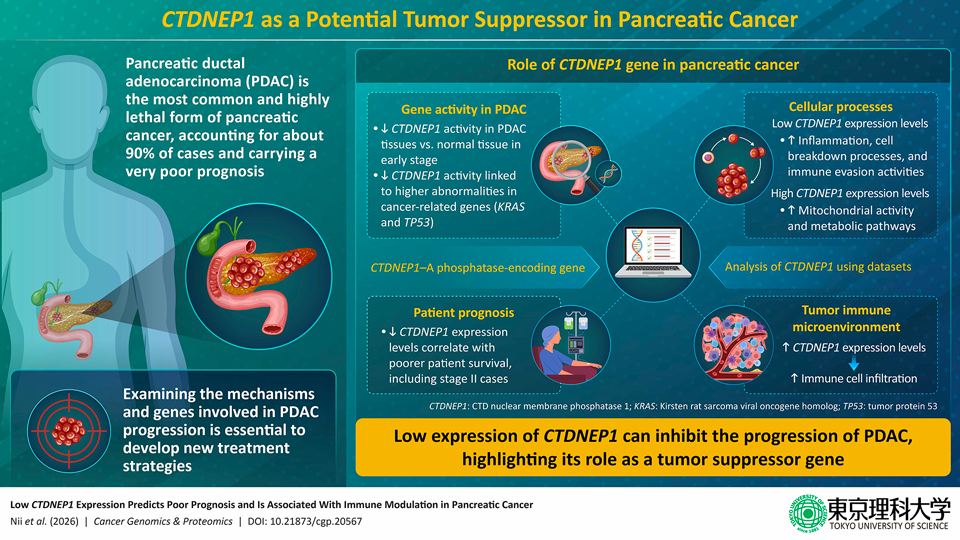
Image title: CTDNEP1 gene influences pancreatic cancer progression
Image caption: TUS researchers uncovered a strong link between reduced CTDNEP1 expression and pancreatic cancer progression. They found that low levels are associated with early-stage tumors, abnormalities in major cancer-related genes, and lower survival rates, suggesting that CTDNEP1 may act as a tumor suppressor.
Image credit: Professor Tadayoshi Hayata from Tokyo University of Science, Japan
License type: Original content
Usage restrictions: Cannot be reused without permission.
Reference
| Title of original paper | : | Low CTDNEP1 Expression Predicts Poor Prognosis and Is Associated With Immune Modulation in Pancreatic Cancer |
| Journal | : | Cancer Genomics & Proteomics |
| DOI | : | 10.21873/cgp.20567  |
About The Tokyo University of Science
Tokyo University of Science (TUS) is a well-known and respected university, and the largest science-specialized private research university in Japan, with four campuses in central Tokyo and its suburbs and in Hokkaido. Established in 1881, the university has continually contributed to Japan's development in science through inculcating the love for science in researchers, technicians, and educators.
With a mission of "Creating science and technology for the harmonious development of nature, human beings, and society," TUS has undertaken a wide range of research from basic to applied science. TUS has embraced a multidisciplinary approach to research and undertaken intensive study in some of today's most vital fields. TUS is a meritocracy where the best in science is recognized and nurtured. It is the only private university in Japan that has produced a Nobel Prize winner and the only private university in Asia to produce Nobel Prize winners within the natural sciences field.
■
Tokyo University of Science(About TUS)
About Professor Tadayoshi Hayata
from Tokyo University of Science
Dr. Tadayoshi Hayata became an Associate Professor and Principal Investigator at the Department of Molecular Pharmacology, Faculty of Pharmaceutical Science at the Tokyo University of Science in 2018. In 2023, he was promoted to Full Professor. His laboratory focuses on bone metabolism, cellular differentiation, molecular pharmacology, and similar fields to understand the nature of bone and joint diseases and find therapeutic targets. Prof. Hayata is affiliated with several Japanese Societies and the American Society for Bone and Mineral Research. He has published over 90 original articles and given over 70 presentations at academic conferences. In addition, his research on osteoporosis has made it to Japanese newspapers several times.