


Space Colony Unit
The Space Colony Unit is a research and development hub dedicated to expanding human activities into space and advancing the technologies required for a sustainable human presence beyond Earth.
For humans to live safely and comfortably over extended periods in extreme environments such as outer space, the Moon, and Mars, it is essential to develop integrated systems that combine a wide range of technologies, including habitation, energy, resource recycling, communications, sensing, and health management. Drawing on the broad expertise of Tokyo University of Science in materials science, architecture, energy systems, information and communication technologies, sensing, and life sciences, the Unit works to create the foundational technologies that will support future space habitation.
Technologies developed for space habitation can also contribute to solving challenges on Earth. Examples include the development of resilient infrastructure for disaster response and sustainable resource-circulating systems with reduced environmental impact. With a perspective that connects space and Earth, the Unit promotes collaboration among researchers and industry partners across disciplinary boundaries. Through these efforts, we seek to create innovative technologies and new value that will help open the next frontier of human exploration and activity.
Message
Takayoshi KOHMURA
Space Colony Unit Leader
Faculty of Science and Technology, Department of Physics Phvsics and Astronomy, Professor
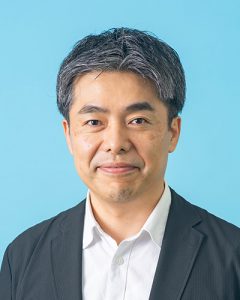
Throughout history, humanity has advanced by venturing into the unknown, gaining new knowledge and technologies that have transformed society. Today, the next frontier of this endeavor is expanding into space.
To enable long-term human activities beyond Earth, we will need far more than transportation systems. Safe and comfortable living environments, sustainable energy supplies, resource recycling, health management, and advanced information and communication technologies will all be essential. Life in space cannot be realized through any single technology alone. It requires the integration of knowledge and innovations from a wide range of disciplines.
The Space Colony Unit brings together researchers from diverse fields, including materials science, architecture, environmental science, energy systems, information and communication technologies, and sensing technologies. Through these collaborations, we seek to develop the foundational technologies that will support future human activities in space. At the same time, technologies and systems developed for space environments can contribute to addressing challenges on Earth, including the realization of sustainable societies and resilient infrastructure capable of responding to natural disasters.
By maintaining a perspective that connects space and Earth, we promote collaboration among researchers, students, and industry partners from diverse backgrounds. Through these efforts, we strive to create new knowledge and technologies while fostering the next generation of scientists, engineers, and innovators who will shape the future of space exploration and society.
We warmly welcome not only those already engaged in space-related activities, but also those from other disciplines who are interested in contributing their expertise to this challenge. Together, we aim to create the technologies and value that will support humanity’s next stage of exploration and activity.
NEWS
- [Youtube]Developing Cameras for Satellites to Remove Debris for Safer Aerospace, Professor Shinichi Kimura 2024.04.19
- Media
- Professor Akakura received the Excellent Poster Awards Silver Prize and the Outstanding Prize at 2023 IEEE 12th Global Conference on Consumer Electronics 2023.11.08
- Results
- Hasegawa Lab graduate students received Best Student Paper Award and Student Paper Award at 2023 International Symposium on Nonlinear Theory and Its Applications 2023.10.16
- Results
- Associate Professor Shitanda et al.’s paper was selected for Supplementary Cover in ACS Applied Electronic Materials 2023.09.04
- Results
- Associate Professor Shitanda et al.’s paper was selected for Supplemental Cover in ACS Sensors 2023.08.01
- Results
- Associate Professor Shitanda et al.’s paper was selected for Supplemental Cover and top 10 most read in ACS Sensors 2023.07.11
- Results