


Overview of the Center
The Space Systems Innovation Center (SSI) serves as Tokyo University of Science’s core hub for space-related research and education. Bringing together researchers from diverse fields—including space science, space engineering, environmental and energy technologies, information science, and life sciences—SSI provides a collaborative platform for creating new value inspired by space.
The Center promotes a wide range of research and educational activities through its five units: the Space Education Unit, the Space Physics and Observational Science Unit, the Space Colony Unit, the International Photocatalyst Unit, and the Space Transportation Systems Unit. These activities span from fundamental scientific research aimed at understanding the origin and evolution of the Universe and physical phenomena under extreme conditions, to the development of technologies that support sustainable human activities in space.
A distinctive feature of SSI is its commitment to fostering a virtuous cycle between Earth and space. Through collaboration across diverse academic disciplines and industrial sectors, the Center promotes the transfer of technologies developed on Earth to space applications, while also bringing knowledge and innovations gained through space research back to society. By encouraging the exchange of knowledge, technologies, and human resources across disciplinary and organizational boundaries, SSI seeks to create new research fields, technological innovations, and societal value.
SSI also places strong emphasis on nurturing the next generation of leaders in science, engineering, and innovation. Young faculty members, doctoral students, and master’s students play central roles in research projects, working closely with researchers and industry partners from a wide range of backgrounds. Through these experiences, they develop the skills, perspectives, and creativity needed to address emerging challenges and shape the future.
As a platform for collaboration among researchers, students, industry, government, and space agencies, SSI is committed to creating new value that connects Earth and space. By integrating fundamental science, technology development, social implementation, and human resource development, the Center contributes to the realization of a sustainable future society.
Message from the Director
Takayoshi KOHMURA
Director
Department of Physics Phvsics and Astronomy Professor
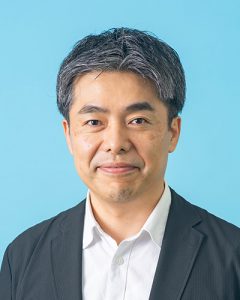
Space is no longer a field reserved only for specialists. Many aspects of our daily lives, including communications, navigation, weather forecasting, disaster prevention, and environmental technologies, are closely connected to space. In the years ahead, space will not only remain a frontier for scientific discovery but will also become an increasingly important arena for innovation, industry, and solutions to global challenges.
The Space Systems Innovation Center (SSI) aims to be a platform where researchers, students, industries, and public organizations come together to create new value through space. While rooted in space science and space engineering, SSI promotes collaboration across a wide range of disciplines and sectors. We believe that transformative ideas emerge when people with different expertise and perspectives work together toward a common goal.
Technologies developed for space can enrich life on Earth, while innovations created on Earth can open new possibilities in space. By fostering this virtuous cycle between Earth and space, we seek to generate new ideas, technologies, and opportunities that benefit both domains.
SSI welcomes not only those already engaged in space-related activities, but also those who may never have considered themselves part of the space community. The creativity of students and early-career researchers, the expertise of scholars from diverse disciplines, and the spirit of innovation found in industry all have important roles to play in shaping the future.
We look forward to working together with people who share a spirit of curiosity, challenge, and collaboration. Through our collective efforts, we hope to create a brighter future for both Earth and space.
Structure and Activities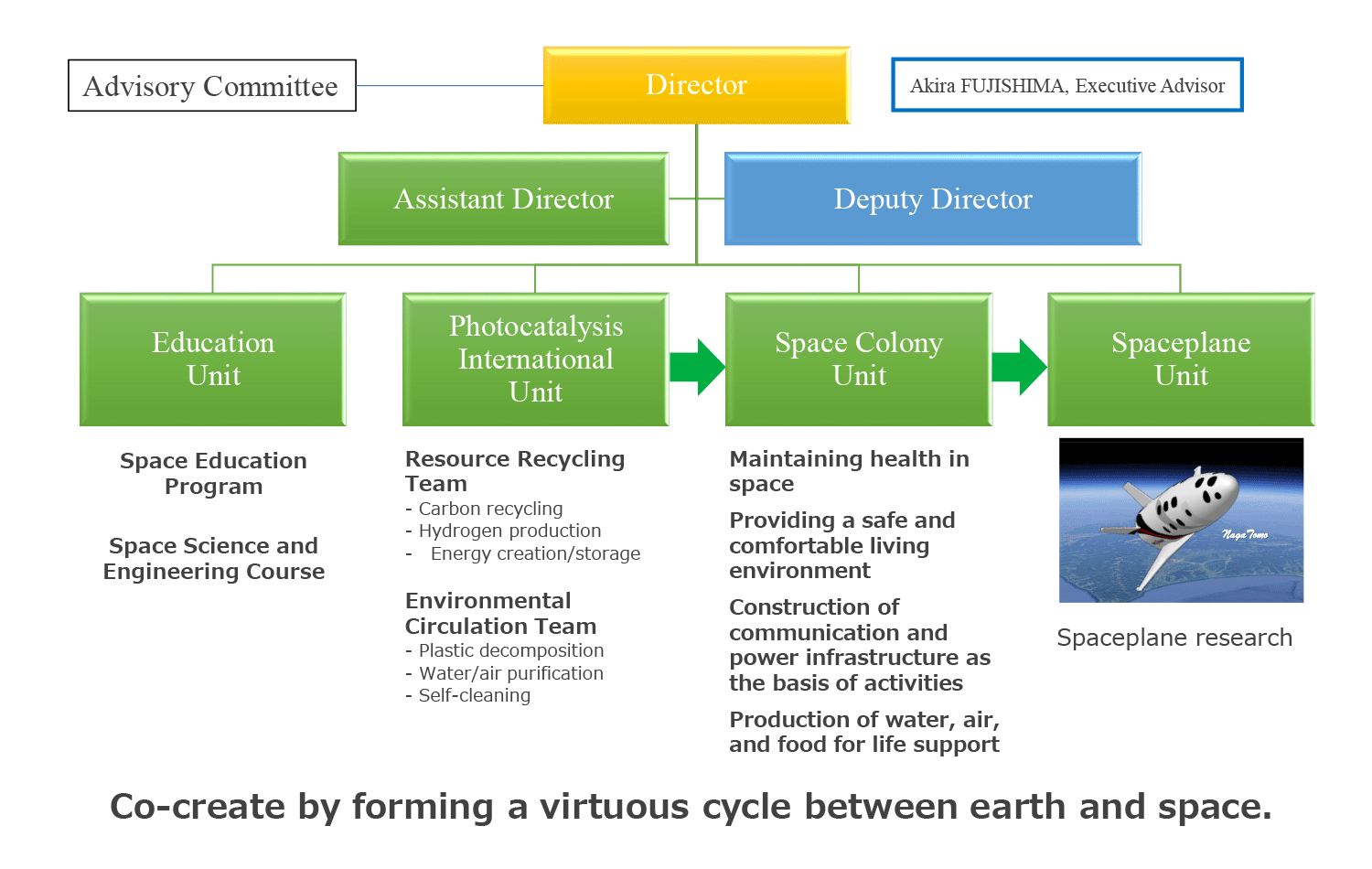
Units
- Space Education Unit Education utilizing “real” technology and experience that leads to actual use in space
Utilizing the technologies and researches of Tokyo University of Science, such as flight missions, rocket launches, theoretical research in astrophysics, and astronomical observations, for the purpose of education is a great incentive for both researchers and students. In addition to participating in a number of missions, we will work in close cooperation with domestic and international space development organizations, space venture companies, and space development companies, and will actively utilize the results obtained for education.
- Astrophysics and Observational Science Space Science Research and Technology Development for Space Observation and Exploration
This unit brings together a cross-disciplinary team spanning space‑related fields of the physical sciences—including X‑ray astronomy, cosmology, particle physics, and Earth and planetary sciences—to promote integrated research across the broad domain of space science, from the origin and evolution of the Universe to the formation and history of the Earth. We investigate a wide range of phenomena through both theoretical and observational approaches, from extreme astrophysical objects such as neutron stars, black holes, and galaxy clusters to the formation and evolution of the Earth and planets.
- Space Colony Unit Advancement of space-stay technologies and promotion of social use, with a focus on space habitation
We are committed to creating foundational technologies that support space habitation, positioning ourselves as a research and development hub aimed at expanding humanity’s sphere of activity into space and realizing a sustainable space-based society. Technologies developed for space habitation will also contribute to solving challenges faced on Earth, such as building resilient infrastructure for disasters and achieving environmentally sustainable, circular societies with minimal ecological impact. From the perspective of connecting space and Earth, we promote co-creation with researchers and companies across diverse fields, and we are taking on the challenge of generating technologies and value that will open new frontiers for humanity.
- Photocatalysis International Unit Solving resource and environmental problems based on photocatalysis
Photocatalysts, such as titanium dioxide, are effective for decomposing organic pollutants and have antibacterial and disinfecting properties, due to their strong oxidative decomposition power. In addition, research on artificial photosynthesis using photocatalysts (hydrogen production by water decomposition and generation of valuable substances by carbon dioxide reduction) is being actively conducted. By advancing these researches, we will tackle existing issues on earth that must also be overcome when entering space, such as environmental purification and energy production.
- Space Transportation System Unit Realizing Fully Reusable Space Transportation Systems for an Era Where Anyone Can Go to Space
Guided by the motto “Toward an era where anyone can go to space,” we conduct research on fully reusable space transportation systems, which are key to realizing this vision. A fully reusable space transportation system is one that, after launching from Earth, delivers people and cargo to the target orbit and then returns to Earth without changing its configuration. Achieving this requires innovative advancements in many core technologies, such as dramatic weight reduction and improved propulsion performance. Our unit aims to contribute to the realization of fully reusable space transportation systems by refining core technologies in areas such as materials, thermal management, and fluid dynamics.
Facilities and Equipment
The Center is equipped with the latest equipment for space development research.
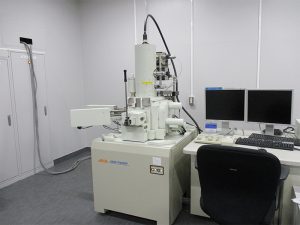
Field Emission Scanning Electron Microscope
JSM-7600F (JEOL Ltd.)
In Common Equipment Room 3, Photocatalysis International Research Center 1F
A semi-lensed high-resolution SEM equipped with an energy-dispersive X-ray analyzer, which enables not only high-resolution observation but also stable, high-speed, and high-precision elemental analysis. As it is possible to irradiate the specimen with an electron beam while applying a bias voltage, the top surface of the specimen can be observed with high resolution even with incident electrons of several hundred eV.
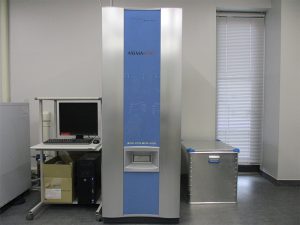
Matrix-assisted Laser Desorption/Ionization Time-of-flight Mass Spectrometer
AXIMA-TOF2 (Shimadzu Corporation)
In Common Equipment Room 2, Photocatalysis International Research Center 2F
Measures the mass of a sample component, and is sometimes used to accurately measure the mass of biopolymers such as proteins.
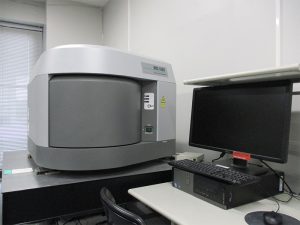
Laser Raman Spectrophotometer
NRS-5100 (JASCO Corporation)
In Common Equipment Room 2, Photocatalysis International Research Center 2F
Performs Raman spectroscopy while taking a microscopic image at high magnification on the surface of the specimen to be observed with the high-resolution CMOS camera built into the main unit. Equipped with two laser light sources with wavelengths of 532 and 785 nm, which can be used depending on the specimen, such as for suppressing the generation of fluorescence.
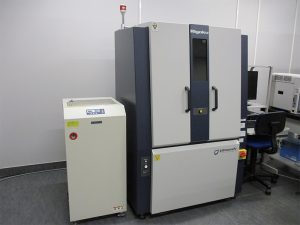
X-ray Diffractometer
Ultima IV (Rigaku Corporation)
In Common Equipment Room 2, Photocatalysis International Research Center 2F
Measures the specimen while holding it horizontally. It is easy to switch between a direct beam for Bragg-Brentano optics that prioritize intensity such as for qualitative and quantitative analysis of powder specimens, and monochromatic parallel beams using a radiation surface multilayer mirror such as for high-precision profile analysis and orientation measurement of powder specimens and measurement of thin films, reciprocal lattice maps, and rocking curves, simply by changing the slit.
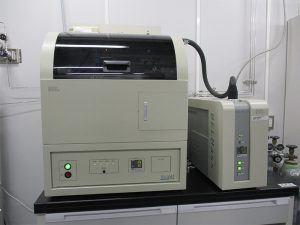
Catalyst Analyzer
BELCAT-B (MicrotracBEL Corp.)
In Self-Cleaning Laboratory, Photocatalysis International Research Center 3F
Allows TPD measurement, which measures the behavior of adsorbed molecules by continuously increasing the temperature after gas adsorption to the specimen, as well as temperature-programmed reduction (TPR) spectrum, temperature-programmed oxidation (TPO) spectrum, metal dispersibility, pulse adsorption amount measurement, and specific surface area measurement by the single-point BET method.
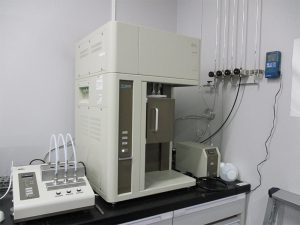
High-precision Gas/Vapor Adsorption Measurement System
BELSORP-max-12-N-VP (MicrotracBEL Corp.)
In Common Equipment Room 2, Photocatalysis International Research Center 2F
Measures specific surface area, pore distribution, vapor adsorption, and chemisorption with one unit. By measuring the amount of nitrogen and other gases adsorbed on the solid surface, information on the specific surface area, pore distribution, and metal dispersion of the solid can be obtained.
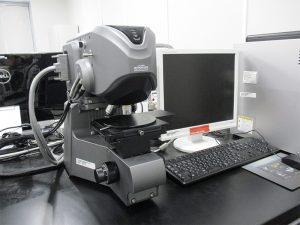
Shape Measurement Laser Microscope
VK-X200 (Keyence Corporation)
In Common Equipment Room 3, Photocatalysis International Research Center 1F
A laser microscope that acquires surface information by laser scanning and performs 3D measurement.
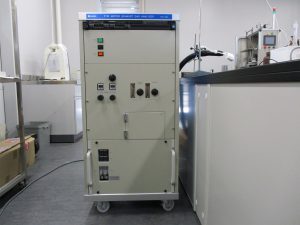
High-speed, Multi-functional FTIR Gas Analyzer for Catalyst Testing
FTIR Emission Gas Analyzer (Portable Type) FAST-1300 (Iwata Dengyo Co., Ltd.)
Photocatalysis Center 4F
Enables fast and multifunctional FTIR gas analysis for catalyst tests using Fourier transform infrared spectroscopy, as well as direct measurement of gas species, such as nitrogen oxides which are difficult to measure by chromatography, in a wide concentration range from sub-ppm to % level.
Therefore, it is possible to quickly measure highly active reactive gases without being affected by the surrounding atmosphere in this research project to produce nitrogen fertilizer from water and air on the spot. In addition, being on-flow, non-destructive, and not requiring pretreatment, it is possible to perform continuous real-time monitoring, and to monitor the product gas as unreacted, allowing an accurate understanding of the catalytic reaction.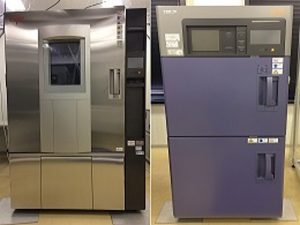
Temperature Tester for Equipment Mounted on Satellite
Ultra-low Temperature Humidity Chamber PG-4J, Small Thermal Shock Chamber TSE-12-A (ESPEC Corp.)
Board-managed Room 3, Noda Campus Building No. 3 2F
Intended to evaluate the suitability of onboard equipment under various temperature conditions encountered in orbit. Consists of a temperature tester for evaluating the temperature compatibility of experimental devices mounted on a 100-cm cubic spacecraft over a wide temperature range of −71 to 150°C and a thermal shock tester that evaluates the adaptability of electronic components such as devices and substrates used in space experimental equipment to thermal shocks caused by sudden temperature changes such as those from shade to sun. The two testers are connected via a network, and records are managed by a PC to achieve centralized control.
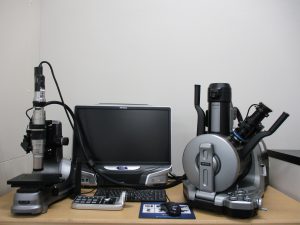
High Precision Interface Observation System for Wearable Sensor Development
Digital Microscope VHX-6000 Series (Keyence Corporation)
Laboratory 5, Noda Campus Building No. 10 4F
Acquires full-focus images at frame rates of up to one second, and recognizes focus information and enables magnified observation at full focus by simply moving the stage to the intended observation point and moving the lens up and down.
Also, by acquiring multiple super-resolution images using short-wavelength light and images with different shutter speeds, and simultaneously operating the HDR function to acquire high-tone images, this enables high-definition and high-contrast observation, allowing observations that were previously impossible.