


Space Transportation System Unit
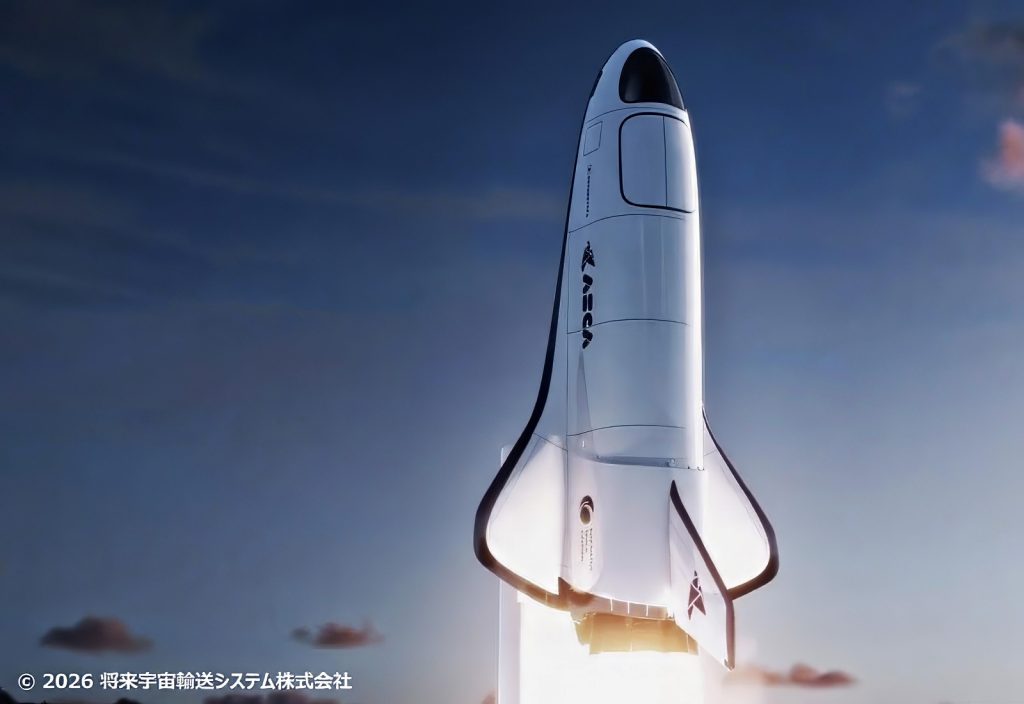
The Space Transportation System Unit (STS Unit), guided by the motto “Toward an era where anyone can go to space,” is advancing research on fully reusable space launch vehicles, which are key to realizing this vision. While rockets are currently the primary means of space transportation, they are expendable vehicles that are discarded after delivering satellites and other payloads into space. A fully reusable launch vehicle is one that, after launching from Earth, delivers people and cargo to the target orbit, and then returns to Earth without changing its configuration. Achieving this requires innovative advancements in many core technologies, such as dramatic weight reduction and improved propulsion performance. The STS Unit aims to contribute to the realization of fully reusable launch vehicles by refining core technologies in areas such as materials, thermal management, and fluid dynamics.
Message
Ko OGASAWARA
Space Transportation System Unit Leader
Faculty of Science and Technology, Department of Mechanical and Aerospace Engineering, Professor
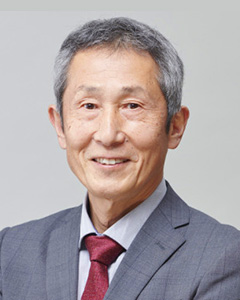
I am Ogasawara from the Department of Mechanical and Aerospace Engineering, and I have been appointed head of the STS Unit. The STS Unit is a new unit that will be established within the Center for Space Systems Innovation in 2026.
Currently, most launch vehicles are expendable; virtually none return to Earth in the same configuration after delivering satellites and other payloads to space. They are designed as multi-stage, single-use vehicles because, in the process of overcoming Earth’s gravity and accelerating to required orbital velocity, it is necessary to jettison parts of the vehicle that are no longer needed for efficient acceleration, thereby lightening the weight.
To use a car trip as an analogy, this means that a car leaving home either cannot return at all, or if it does return, only part of it comes back, making it impossible to set out again.
The Single-Stage-to-Orbit (SSTO) is the ultimate form of space transportation, a system in which the launched vehicle returns to the Earth’s surface in its original configuration and can fly again simply by refueling. Achieving this requires progress and integration across all technological fields, including dramatic weight reduction, improved propulsion performance, more precise and faster flight path planning, coping with the thermal environment during reentry, and maximizing the utilization of propellants.
The SST Unit is committed to advancing the technologies required for SSTO realization within each member’s respective technical fields. In addition to improving individual core technologies, we will pay close attention to the coordination required across the numerous technical fields necessary for SSTO. We also intend to focus on identifying and bringing together members who are interested in exploring new technical and research fields.
NEWS
- SPACE WALKER where Professor Yonemoto serves as CTO is the first private-sector rocket company to receive an investment from JAXA. 2023.05.02
- Reports
- SPACE WALKER where Professor Yonemoto serves as CTO and JALUX Enter into a Capital and Business Alliance Agreement 2023.04.28
- Reports
- SPACE WALKER, of which Unit Leader Yonemoto is the Director CTO, is co-exhibiting at IAC 2022 in Paris together with Japanese space-related companies. 2022.09.21
- Reports