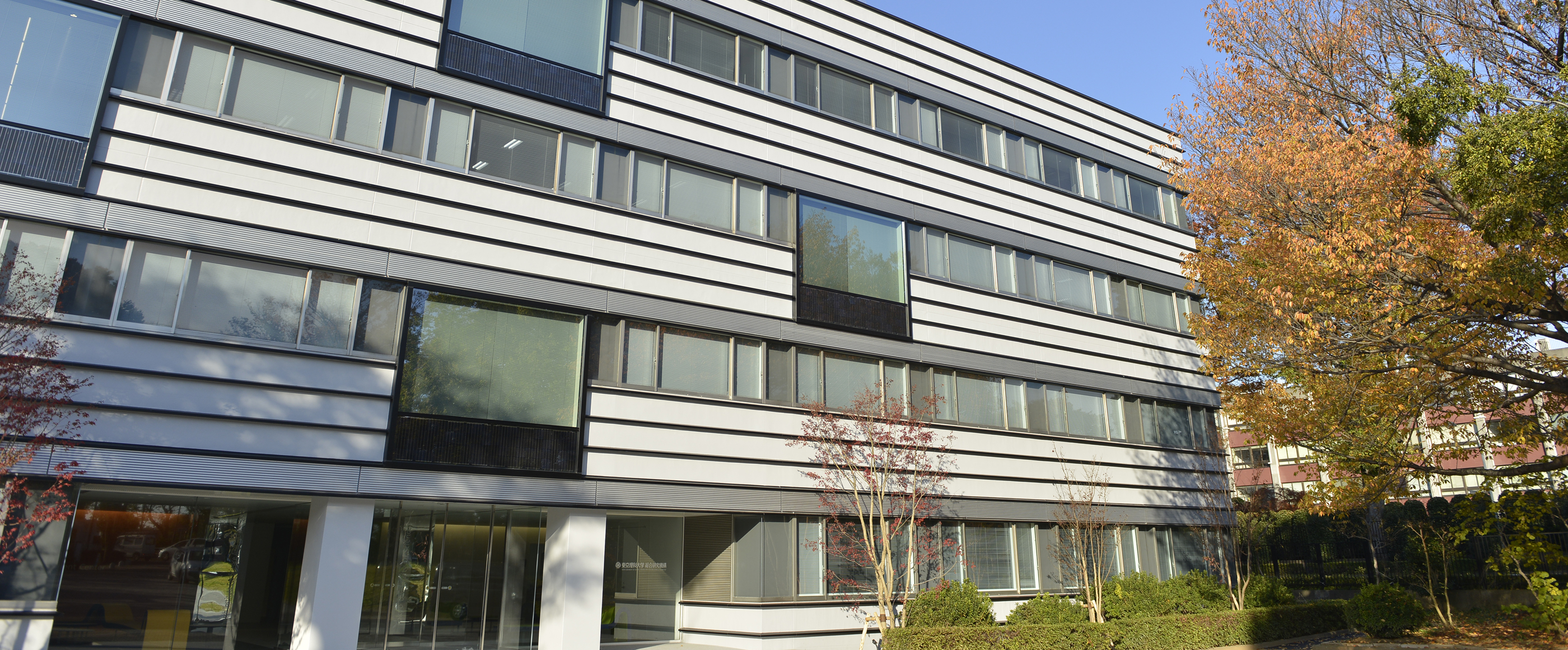
Research Institute for Science and Technology (RIST) was established as a cross-disciplinary research organization under the Organization for Research Promotion, with the aim of advancing cutting-edge interdisciplinary research based on bottom-up proposals from researchers.
Since its establishment, RIST has been committed to fostering students with a broad, integrative perspective and creating societal value through the development of new interdisciplinary research initiatives that integrate diverse fields.
Research Institute for Science and Technology (RIST) celebrates its 45th anniversary in 2026, since the forerunner, the Institute for General Research, was established in 1981. As a cross-disciplinary organization under the Organization for Research Promotion, it was founded to advance cutting-edge interdisciplinary research driven by bottom-up initiatives from researchers. Since then, RIST has fostered new areas of interdisciplinary research through collaboration across diverse fields, while cultivating students with a broad, integrative perspective and contributing to the creation of societal value.
In April 2026, RIST comprises five Research Centers, one Joint Usage/Research Center, two Research Hubs, 23 Research Divisions, one Open Innovation Project, and one Endowed Research Project, all actively engaged in research.
RIST’s research spans a wide range of fields, including Information and Societal, Fundamentals, Functional Materials, Structural Materials, and Bio and Pharmacy. In particular, research addressing environmental and energy challenges has been pursued proactively since before the United Nations established the Sustainable Development Goals (SDGs) in 2015.
Approximately 400 faculty members, including professors, associate professors, lecturers, and assistant professors, are affiliated with RIST, either on a full-time or concurrent basis. This represents about one-quarter of faculty in Tokyo University of Science (TUS), reflecting broad participation in interdisciplinary research. Research activities originate from bottom-up proposals and evolve in response to scientific progress and societal needs, with organizational structures being adapted in a flexible and timely manner.
The 23 Research Divisions serve as core units for interdisciplinary and cross-cutting research. Each division brings together selected researchers from within and outside TUS and operates for a period of three to five years, generating strong synergies. As research develops, divisions may evolve into Research Hubs, which serve as central platforms for larger-scale interdisciplinary collaboration. Research Centers, in turn, pursue strategically important initiatives over a period of five to ten years while securing external funding. In addition, Co-creation Projects promote the development of new value through collaboration between TUS and industry, with a focus on real-world implementation. The Joint Usage/Research Center, accredited by the Ministry of Education, Culture, Sports, Science and Technology (MEXT), supports advanced collaborative research with external partners.
Key initiatives launched since 2022 include the following:
The Research Center for Drug Discovery and Applied Sciences was established in 2023 to carry on the Chemical Biology Division Supported by Practical Organic Synthesis, which had been active until 2022, through collaboration with researchers in the field of molecular biology. The goal of this Center is to create drugs by carrying out drug discovery research on new substances developed by TUS using our proprietary organic synthesis technology.
The Nucleic Acid Drug Discovery Center was launched in 2024 based on the research results of the Division of Nucleic Acid Drug Development, which was active until 2023. With a view to commercializing nucleic acid drugs, the center aims to create nucleic acid drugs for new target diseases through the establishment of new methods for synthesizing chemically modified nucleic acids, the development of artificial molecules that stabilize nucleic acid drugs, and the establishment of DDS and formulation methods.
One of the Research Hubs, the Carbon Value Research Center was developed in January 2022 with the aim of utilizing the science and technology of the university’s faculty to develop essential chemical science and technology, such as artificial photosynthesis, that will contribute to carbon neutrality, through collaboration and joint research with external organizations. The Center is developing carbon value science and technology by pursuing the science and technology of green hydrogen production and the synthesis of useful materials utilizing carbon dioxide as a source of carbon.
The other Research Hub, the Research Center for Multi-Hazard Urban Disaster Prevention was launched in August 2023. The Center will create and implement a new science of urban disaster management that addresses multi-hazards in which hazard chains occur across time and space causing an increase in damage, through strong collaboration of disaster management researchers on various hazards and data science researchers. Through this Center, we aim to build a safe and security society in which no one is left behind in a sustainable and diversity-conscious manner.
In 2022, a new Open Innovation Project, the Research & Development Platform of Functional Green Building Materials, was launched in collaboration with Shimizu Corporation. This Project promotes research and development aimed at the social implementation of environmentally friendly architecture.
Through collaboration on research across Research Centers, Research Hubs, and Research Divisions, RIST aims to enhance the fluidity and mobility of faculty personnel. By taking advantage of appealing research environments that are rich in vitality and unity, we aim to foster highly creative, diverse human resources who will lead the next generation of society, and to become an international hub for interdisciplinary research.