
In 2017, on the 50th anniversary of the Faculty of Science and Technology’s founding, cross-disciplinary courses were introduced at the Graduate School to promote education and research across multiple fields. Building on this, the Graduate School of Science and Technology’s cross-disciplinary courses have the operational objective of realizing innovation and generating high-added-value research outcomes. The program started with six courses, but now comprises eight: the Interdisciplinary Medical Science and Technology Course, the Interdisciplinary Agricultural Science and Technology Course, the Space Science and Technology Course, the Integrated Science and Technology for Human Safety and Health Promotion Course, the Energy and Environmental Systems Course, the Disaster Prevention and Risk Management Course, the Digital Transformation Course, and the Advanced Teacher Training Course. Plans are underway to establish additional new courses in the future, and the program is designed to evolve flexibly in response to the demands of the times and the changes in faculty members’ research themes.
The Faculty’s six-year integrated course of study is often compared to the cross-disciplinary courses. While the six-year integrated course of study has been formulated to deepen expertise in a specialized field by efficiently integrating the undergraduate program and the master’s degree program over six years, the two are not mutually exclusive. The cross-disciplinary courses serve as a means for students to acquire additional knowledge across a broader range of fields, in keeping with their interests and career paths, while simultaneously delving deeply into their major through the six-year integrated course of study.
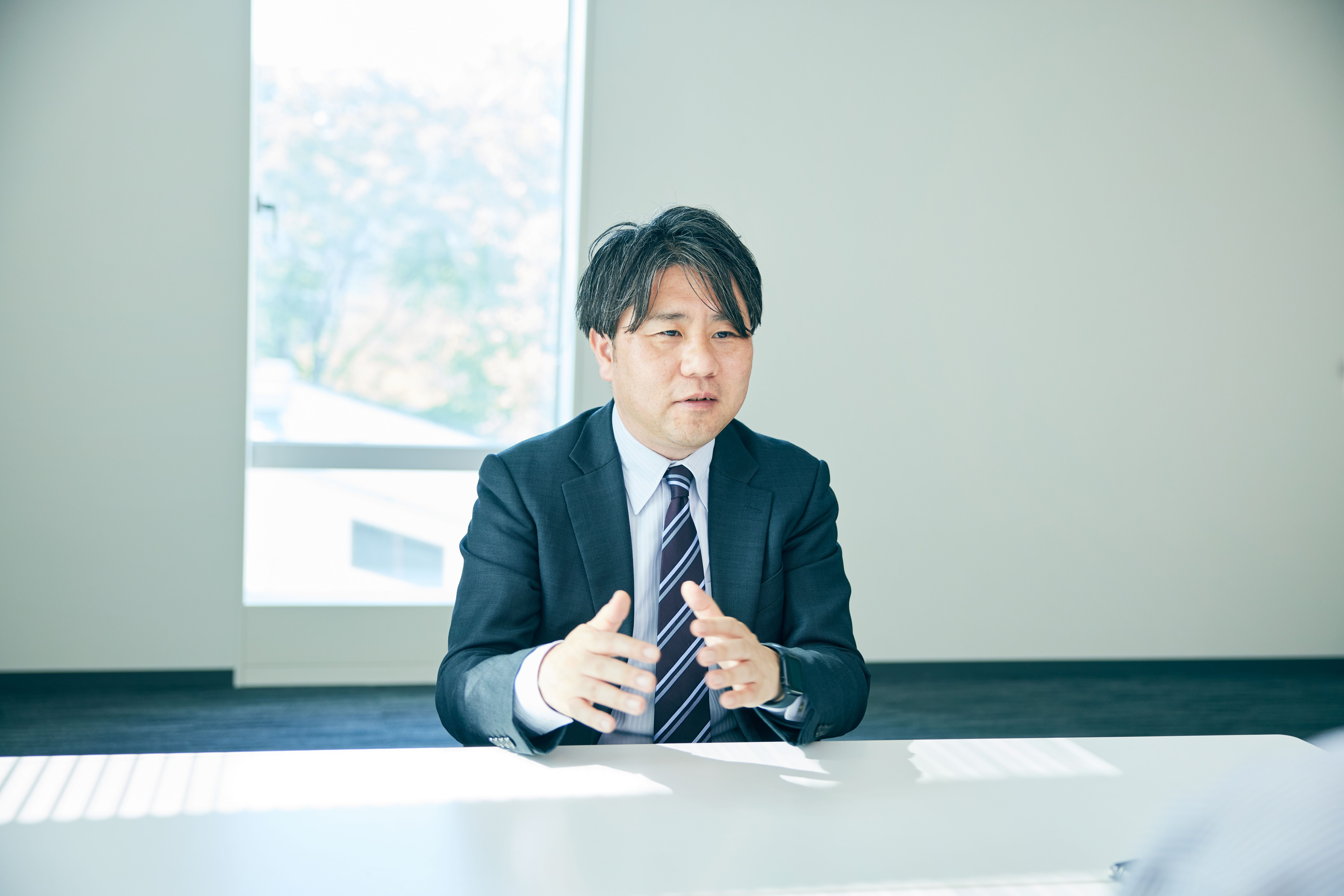
The Energy and Environmental Systems Course engages with the critical challenges of curbing global warming and realizing a sustainable society. Faculty members and students currently in the course come from the Department of Mathematics, the Department of Architecture, the Department of Pure and Applied Chemistry, the Department of Electrical Engineering, the Department of Industrial and Systems Engineering, and the Department of Mechanical and Aerospace Engineering. The study and research these students take part in covers a huge array of topics, from materials and device development to system planning and even overall evaluations and verifications.
“In our laboratory, we work on developing physically and chemically stable conductive diamond compounds as well as carry out applied research to solve social challenges, such as fuel cell catalysts and the purification of contaminated water,” says Professor Kondo, the course leader. “However, to achieve the greater goal of curbing global warming, we need a holistic perspective that goes beyond materials — one that addresses how to supply hydrogen cleanly and at low cost, and how to store and use it efficiently.”
Professor Kondo did not join the program at the outset, but he later decided to join as a cross-disciplinary course faculty member in response to repeated requests from students and because the course’s philosophy resonated with him. Lively exchanges take place even outside the laboratory walls precisely because the course brings together students with independent and inquiring minds. This combination of eager students has produced results focused on real-world applications, such as an analysis of the implementation scenarios for a hydrogen production technology using sewage sludge as its raw material. This work was later presented at an academic conference.
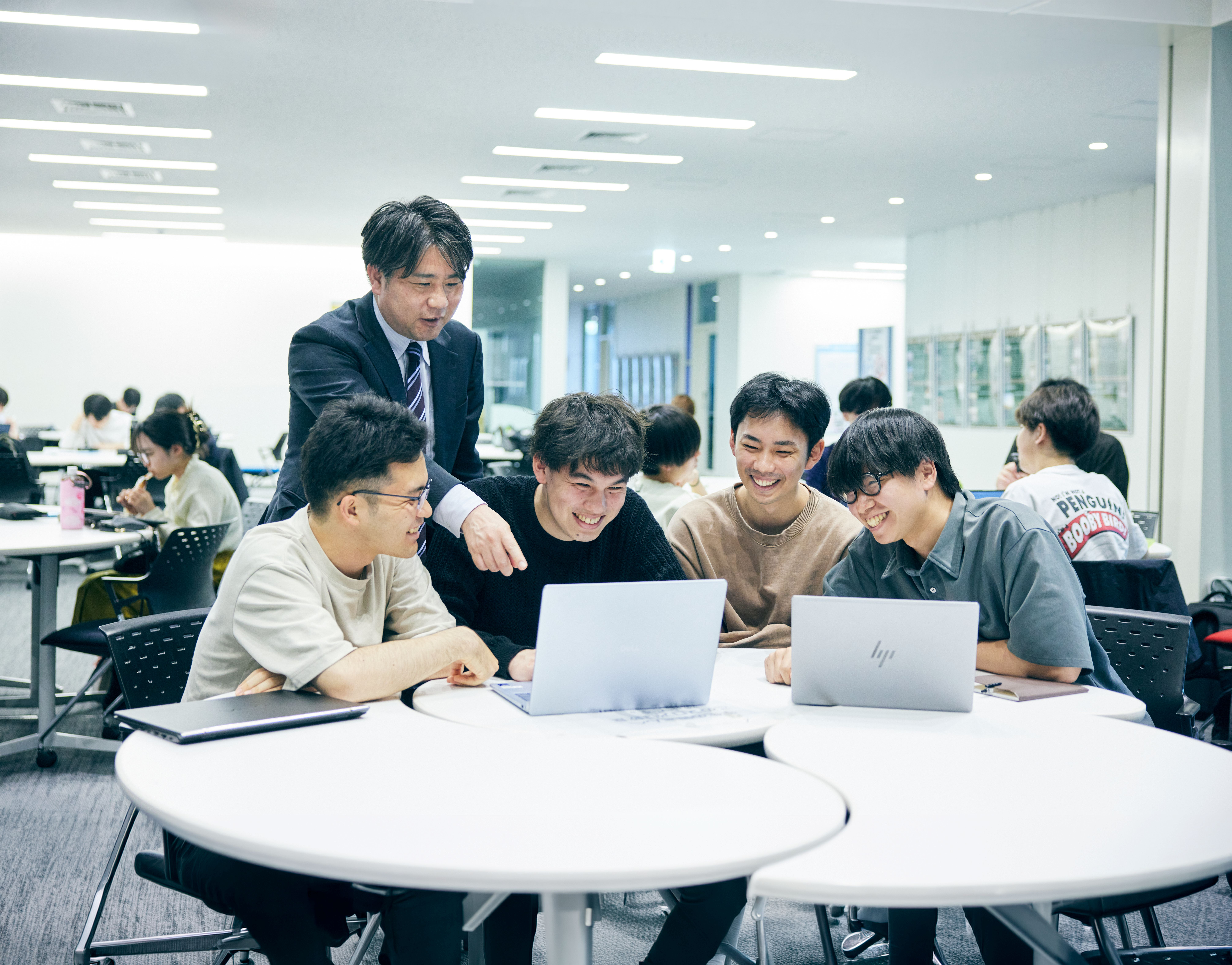
A true benefit of the Energy and Environmental Systems Course is its fostering of top-down insight that gives students the ability to take in the entire energy sector, from upstream to downstream, rather than remaining confined to a single, narrow field. Through lectures on advanced topics in energy systems engineering, students acquire the foundational knowledge needed to tackle the subject of sustainable societies from the perspectives of multiple science and technology fields. At the same time, they take practical seminars in energy and the environment. In these seminars, students with different majors engage in group work, combining their specialized knowledge to develop plans for collaborative research themes. Moreover, students hone problem-solving skills that are immediately useable in the workforce by attending special lectures by researchers from private companies and by presenting their research findings in poster competitions to other students where they are subject to rigorous cross-examinations.
“It is very hard for a single individual to acquire a broad range of knowledge across all fields,” says Professor Kondo. “This is why we have students understand the possibilities and limitations of what can be achieved in adjacent fields in order to produce more robust collaborations in the future.”
In this course, the first sure steps are being taken toward tackling the major challenges facing our global environment.
■ Main research themes