
In 2017, on the 50th anniversary of the Faculty of Science and Technology’s founding, cross-disciplinary courses were introduced at the Graduate School to promote education and research across multiple fields. Building on this, the Graduate School of Science and Technology’s cross-disciplinary courses have the operational objective of realizing innovation and generating high-added-value research outcomes. The program started with six courses, but now comprises eight: the Interdisciplinary Medical Science and Technology Course, the Interdisciplinary Agricultural Science and Technology Course, the Space Science and Technology Course, the Integrated Science and Technology for Human Safety and Health Promotion Course, the Energy and Environmental Systems Course, the Disaster Prevention and Risk Management Course, the Digital Transformation Course, and the Advanced Teacher Training Course. Plans are underway to establish additional new courses in the future, and the program is designed to evolve flexibly in response to the demands of the times and the changes in faculty members’ research themes.
The Faculty’s six-year integrated course of study is often compared to the cross-disciplinary courses. While the six-year integrated course of study has been formulated to deepen expertise in a specialized field by efficiently integrating the undergraduate program and the master’s degree program over six years, the two are not mutually exclusive. The cross-disciplinary courses serve as a means for students to acquire additional knowledge across a broader range of fields, in keeping with their interests and career paths, while simultaneously delving deeply into their major through the six-year integrated course of study.
The Interdisciplinary Agricultural Science and Technology Course currently has faculty members and students from eight departments: the Department of Information Sciences, the Department of Applied Biological Science, the Department of Architecture, the Department of Pure and Applied Chemistry, the Department of Electrical Engineering, the Department of Industrial and Systems Engineering, the Department of Mechanical and Aerospace Engineering, and the Department of Civil Engineering. By integrating the understanding of the biological functions of plants, microorganisms, and other living beings with science and engineering technologies, the course aims to drive innovation in food, the environment, and resources.
“Examples include research in the food sector aimed at increasing crop yields by boosting plant immunity to make them more resistant to disease; research in the environmental sector focused on using microorganisms to break down soil contaminants; and research in the resources sector focused on creating various products from plant-derived raw materials,” explains Professor Furuya, who leads the course.
Professor Furuya has long been engaged in research that uses microorganisms and enzymes to assist environmental conservation and the production of eco-friendly materials. “There is a global trend toward replacing petroleum-based materials with plant-derived ones in the production of chemical products and other goods to reduce carbon dioxide emissions,” he notes. Tackling such social challenges will increasingly require the aggregation of knowledge and technologies from many different fields.
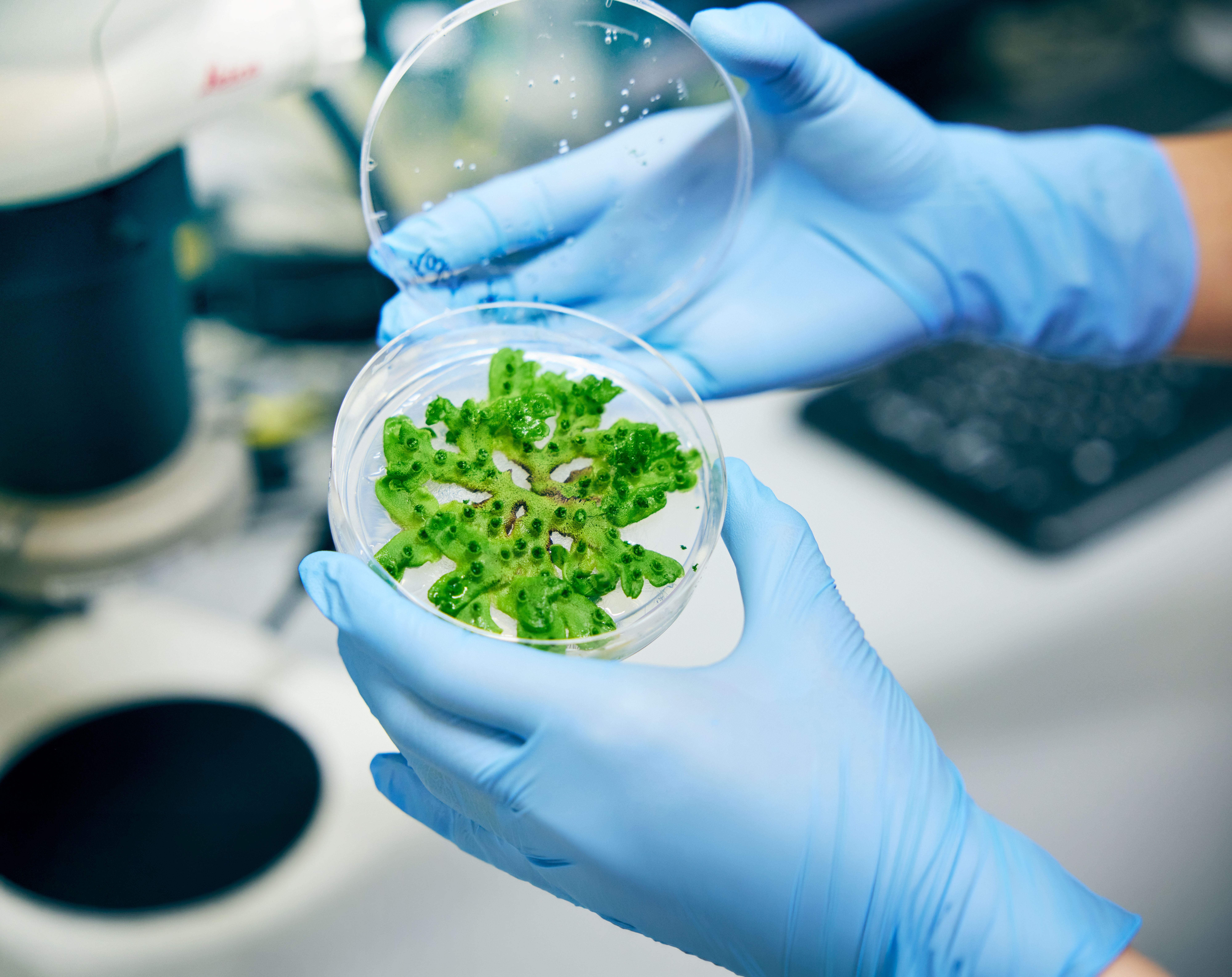
Research in biology and agricultural science often involves long-term experiments using living organisms, which can narrow students’ perspectives on other fields. Conversely, students in science and engineering rarely have opportunities to engage with cutting-edge biological sciences. The Interdisciplinary Agricultural Science and Technology Course enables students to acquire multidisciplinary knowledge and hone their problem-identification and problem-solving abilities.
With an emphasis on globalization, the course includes lectures by a diverse range of instructors from industry and from other countries. It also features seminar-style classes where students from different disciplines engage in active discourse that serves to elevate their discussion and presentation skills. Working in conjunction with the six-year integrated course of study, the course fosters broad perspectives during the undergraduate (bachelor’s) program and creates an environment where students can concentrate on highly specific experiments and research during the master’s program.
“I believe agricultural science and technology is a field with nearly unlimited potential to expand,” says Professor Furuya. “I think the course’s students, by gaining exposure to a wide range of topics, will be ready and willing to embrace new ideas that arise once they enter society. Furthermore, the course will undoubtedly improve their ability to explain their own research in clear terms to people outside their field.”
Given the ambitions of this course, the day is not far off when talented individuals equipped with flexible and diverse perspectives will help bring about a society in which people can live with assurance.
■ Main research themes